My Story
My name is Melissa Steinke.
I am a mother of three, a wife, a daughter, a sister, an aunt, and a friend. I am also a lifelong learner, a passionate educator, an explorer, and a storyteller.
Harold Johnson (2022) writes, “We are all story. We are the stories we are told and we are the stories we tell ourselves” (p. 35). This understanding of story as both inheritance and choice offers a new lens through which I might consider my life, my work, and my learning.

 |
|---|
 |
 |
|---|
Sitting at this intersection of time, space, and story, I am not sure where to begin.
Throughout my life, the potentiality of women was modelled for me alongside the expectation that it required persistence and hard work. My early years were spent in economic precarity. My mother was single, young and determined and although I did not recognize it at the time, her commitment to education and tenacity shaped my understanding of what it means to persist and to claim space.
I spent many evenings with my grandmother, an inspirational woman who taught me about the power of story. She loved literature and writing and described a time in her life when she became “furiously creative” (Hughes, 1991, p. 158). Following her passion, she wrote short stories, articles, children’s books and novels. Though unpublished for years, she persevered and was later recognized with the Order of Canada. Her commitment to storytelling shaped my love of children’s literature and instilled in me a belief in perseverance and creative expression. Her legacy continues to influence how I understand story as both personal and pedagogical.
 |
|---|
 |
 |
|---|
 |
|---|
 |
|---|
 |
|---|
Johnson (2022), reminds us that “to change our circumstances, we need to change our story: edit, modify it, or completely rewrite it” (p. 35). This idea, that stories can be revised and re-authored, has been something that has propelled me forward while also keeping me grounded.
After a decade working in urban land development and the birth of my third child, I stayed home to care for my young children. During that time, I began volunteering at our community playschool, and it was there that I discovered a profound love for early learning and childcare. I remember sharing that it felt like discovering who I was always meant to be.
My early professional experiences in early childhood education taught me what quality truly feels like, not only how it looks in policy or practice, but how it is lived in relationships with children and families. Working within a university lab school community shaped my understanding of pedagogy as relational, ethical, and deeply connected to belonging. Although it was difficult to leave that community, I felt compelled to seek spaces where I could make a broader impact.
In subsequent roles supporting young parents and families, I came to understand family-centred care as a lived commitment rather than a theoretical ideal. This experience strengthened my commitment to equity-oriented practice and to supporting educators as they negotiate and navigate complex family and community contexts.
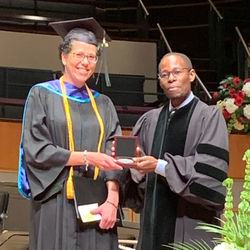
Continuing my studies has deepened this work. Graduating from MacEwan University’s Bachelor of Applied Human Services Administration program affirmed my growing interest in relational leadership and the ethical dimensions of care. Teaching in post-secondary contexts has since expanded my understanding of early childhood education as globally situated. At NorQuest College, I work with learners from around the world whose stories continue to shape how I understand myself, my role, and the educator I want to be.
 |
|---|
 |
|---|
 |
|---|
This is not all of my story. It is neither the beginning, the middle, nor the end. Rather, it serves as an introduction. Because my work cannot be separated from my story, I will continue to weave elements of it throughout this portfolio. As Stremmel (2014) reminds us, “It is through our shared stories that we become fully known to ourselves and others and see new possibilities” (p. 2).
