
Photo from Wix
Situating My Work
I chose to complete a master’s program as I desired to know more - to seek, through formal study, learning experiences that would extend the breadth and depth of my understanding of Early Learning and Child Care. While there were moments where this pursuit of contextualized knowledge was realized, my time at the University of British Columbia has felt less like accumulation and more like an awakening. Through my master’s work, I have moved from a space of what I believed was knowing to the realization of how sheltered I have been. In this new space of unknowing - estranged from assumed certainties and truths I once held about this world and about myself - I am often unsure. It is as if layers of myself have been peeled back, revealing something raw, something new, and something that now yearns to stretch and grow. As I continue to reinvent both my personal and professional self, I am uncertain of where I am going; however, I know the direction is forward. Much of the scholarly work within the program has centred on social justice - critically engaging with sociocultural perspectives, examining the dominant narratives that had shaped many of my beliefs about identity and education, and moving toward counter-narratives that disrupt harm and resist deficit framings. In the final terms of our program, I began to more intentionally notice the narratives - both explicit and implicit - within our research and readings. These stories began to speak to me, and storying itself became a tool through which I started seeing, interpreting, and making meaning of the work. This graduating e-portfolio documents my journey through the Master of Education in Early Childhood Education at the University of British Columbia, making visible how theoretical foundations, lived experience (stories of today and yesterday), and professional practice have become entwined. Grounded in critical sociocultural theory, critical race theory, and narrative inquiry, my portfolio locates learning and identity as relational, storied, and continuously in the making. Through this portfolio, I aim to make visible both my learning and my passions, my commitment to applied inquiry and knowledge mobilization, and my responsibility to ensure that critical scholarship remains accessible, relevant, and responsive to educators’ lived realities. Organized through the metaphor Entwined, Entangled & Unbroken: Stories of an Undivided Self, the portfolio weaves together inquiry and practice. Artefacts drawn from coursework, including digital projects, workshops, critical dialogue with peers, and academic and reflective writing, demonstrate theory-to-practice connections, particularly the translation of critical theories into accessible, practice-grounded resources for early childhood educators. Together, these artefacts illustrate how scholarly engagement and sustained critical self-reflection supported meaningful shifts in my pedagogical perspectives and leadership commitments.

Photo from Concept of Art, Hu
Living, Telling, and Retelling: Processes of Narrative Inquiry
In a fractured age,
when cynicism is god,
here is a possibly heresy:
we live by stories,
we also live in them.
One way or another we are living the stories
planted in us early or along the way,
or we are also living the stories we planted –
knowingly or unknowingly – in ourselves
We live stories that either give our lives meaning
or negate it with meaninglessness.
If we change the stories we live by,
Quite possibly we change our lives.
(Okri, 1997, as cited in Clandinin, 2020, p. 218)
Metaphor
Entwined, Entangled & Unbroken:
Stories of an Undivided Self
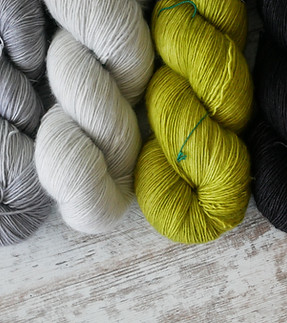
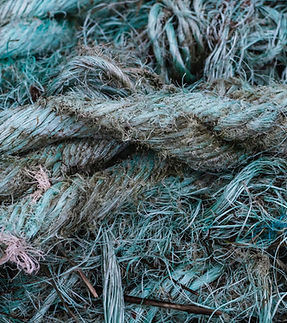
The metaphor, Entwined, Entangled & Unbroken: Stories of an Undivided Self, reflects my understanding of learning, identity, and professional practice as relational, storied, and continuously in the making. Rather than viewing knowledge, identity, or pedagogy as disconnected or compartmentalized, this metaphor positions them as threads - stories that originate in different places and are shaped by social and personal histories, culture, and power - woven together over time to form who we are and who we are becoming. Kingsnorth & Hine (2009) explain that “it is through stories that we weave reality.”
These are the threads that make up my own life, my work as an educator, and my engagement with the field of early childhood education. These threads are distinct; they carry different purposes, tensions, and influences. Together, they form the tapestry of the self through which I teach, learn, and lead.

“We listen to stories differently than we listen to everyday speech, “hearing” the storyteller with our ears, our eyes, and our heart – when you care about both the story and the listener(s), the story will have a lasting effect”
(De Vos st al., 2003, p. xviii).